

At a conference last fall in Las Vegas, a woman stopped me to ask if she could take a picture of my hair to show her stylist.
This isn’t all that unusual when I travel outside the Pacific Northwest.
Even in Portland, it’s taken me years to find a stylist who will nail a bleach-blond asymmetrical pixie without making me look like a 12-year-old boy or a soccer mom. It’s hard to find someone who will say “fuck yeah” instead of “are you sure, sweetie?” when I say “let’s get the clippers out this time.”
These days, I’ve got a badass barber who can take the direction of “give me a chaos bisexual pixie that works with an eye patch” and run with it. (Heyyyy, Panda!) But not everyone is so lucky.
Which is why I always say yes when someone asks if they can take a picture of my hair to show their stylist.
After the brief photo session (front, back, and sides, of course) the woman gave me another look.
“You’re the author who got shot in the eye, right?” she asked. “Some of my friends were talking about you. I like your eye patch.”
“Thanks,” I said; this question is also not that unusual any more. “Gotta have a fun eye patch, if you’re gonna have to wear one.”
“Exactly.” The woman held up her cane, which was made of gorgeous clear acrylic. “When I finally gave in to using a cane, I got this one. It’s the same brand Selma Blair uses.”
I recently read that the oldest known ocular prosthetic was found in Iran, and dates back to 2900-2800 BC. The surface of the eye is covered in gold and engraved with the rays of the sun, which is extremely badass.
My rhinestone eyepatch seems a bit shabby compared to actual gold. But on the extremely bright side, at least I didn’t have eye surgery in 2900 BC Iran. Yikes.
Speaking of bright sides, I picked up The Happiness Advantage by Shawn Achor after attending this presentation by Kate Pickford at 20Books Vegas, and read it on the plane home.
Achor’s premise is that we often believe that success will lead to happiness—but research shows that people who are happier tend to find more success. For example, in one study doctors who were primed with the delightful promise of a piece of candy after reviewing medical records tended to diagnose patients more accurately (and more quickly) than those who were primed by reading medical journals, or those who had no priming at all.
In the chapter titled “Falling Up,” Achor talks about the science of dusting ourselves off after failure or setbacks. So much of what happens next is in the mindset, he writes. To get psychological, it’s in the “counterfact” that we choose to believe when we’re presented with something bad.
He does this exercise where he asks people to imagine they’ve stopped in a bank on their lunch break. There are fifty other people in the bank, but when a robber comes in and a single shot is fired, they're hit in the arm. Is that lucky, or unlucky?
In his experience, he find a 30-70 split with people who see themselves as lucky vs unlucky.
The “unlucky” people say things like, there are fifty other people who could have been shot instead of me! Or, I could have gone to the bank any day that week, and instead I picked that one!
The “lucky” people say things like, I’m so grateful no one was killed. Or, I could have been shot somewhere far worse than my arm.
In both scenarios, there is only one “truth,” which is being positioned against a hypothetical counterfact.
This is something we do all the time, right?
If only I’d majored in Engineering instead of Theater I’d have my student loans paid off today.
If only I’d caught the earlier bus I wouldn’t have gotten stuck in this awkward conversation with this weird dude.
If only…
When we “if only” our current situation against a counterfact that casts a positive glow on it (“It could have been so much worse!”), we feel grateful for where we are. When we “if only” against a counterfact that casts a negative shadow (“It could have been so much better!”), we feel miserable.
The thing is, both counterfacts are just as hypothetical. And we get to pick the counterfact we ruminate on.
Look—I’m not saying you should just pollyanna your way through every shitty situation. Some things just suck.
In fact, I’m not giving prescriptive advice at all. I don’t know what anyone else is going through, but The Happiness Advantage was a very impactful read for me, and this section in particular resonated.
I hope it does for you, too.
I’ve said this time and time again since I got shot: It’s not like I see the glass as half full or half empty. It’s like a tiny sip of water splashed out of the glass. Yeah, I’ve been blinded in that eye. But the bullet didn’t travel farther than my retina, and I’ll never stop feeling grateful for that.
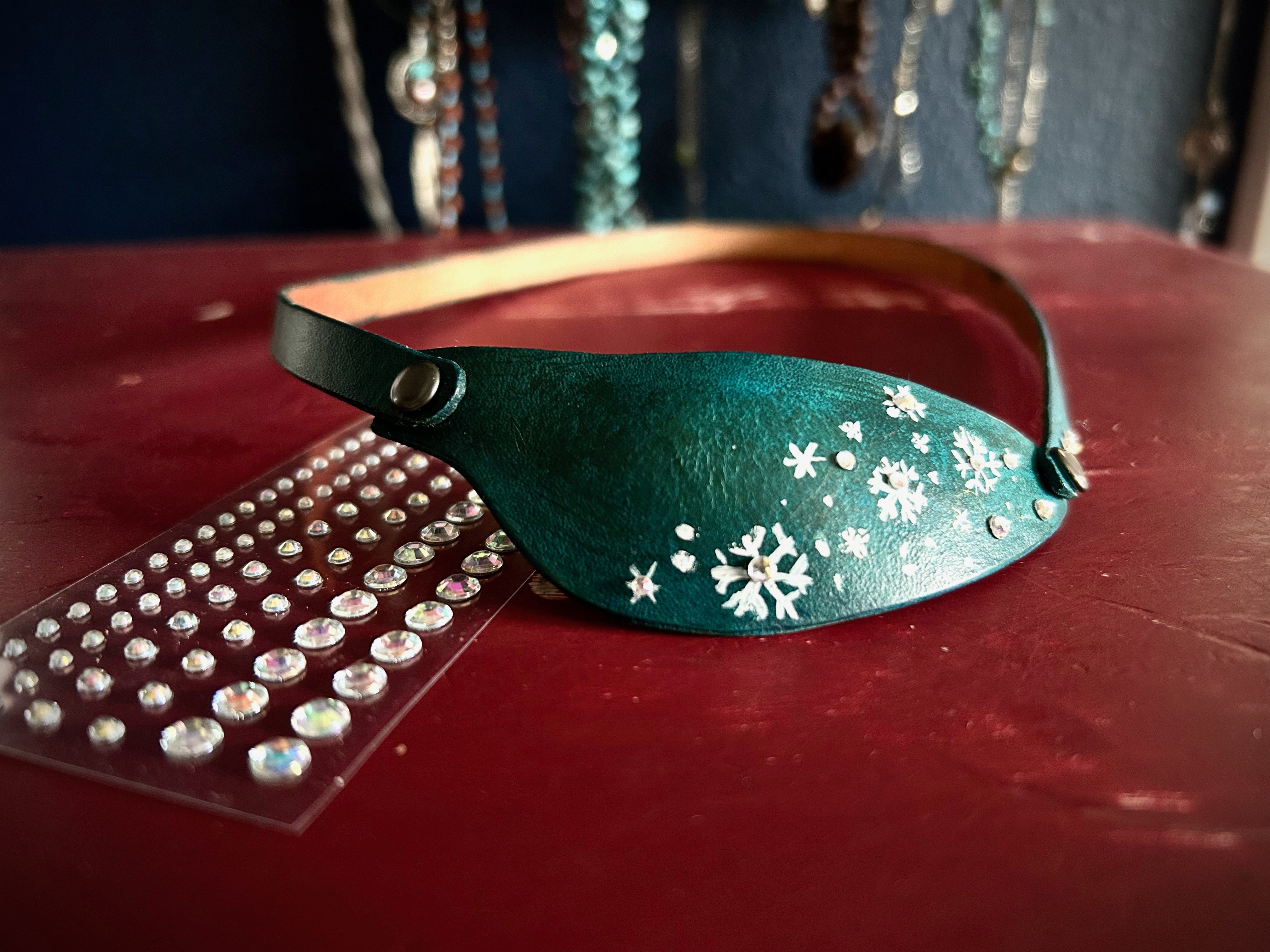
I painted snowflakes on my blue eye patch for the holidays. And, on a whim while out shopping for craft supplies with my niece, I bought a pack of stick-on rhinestones to embellish it.
It makes me ridiculously happy to wear.
I feel magical.
This isn’t the first time I’ve glammed up an injury.
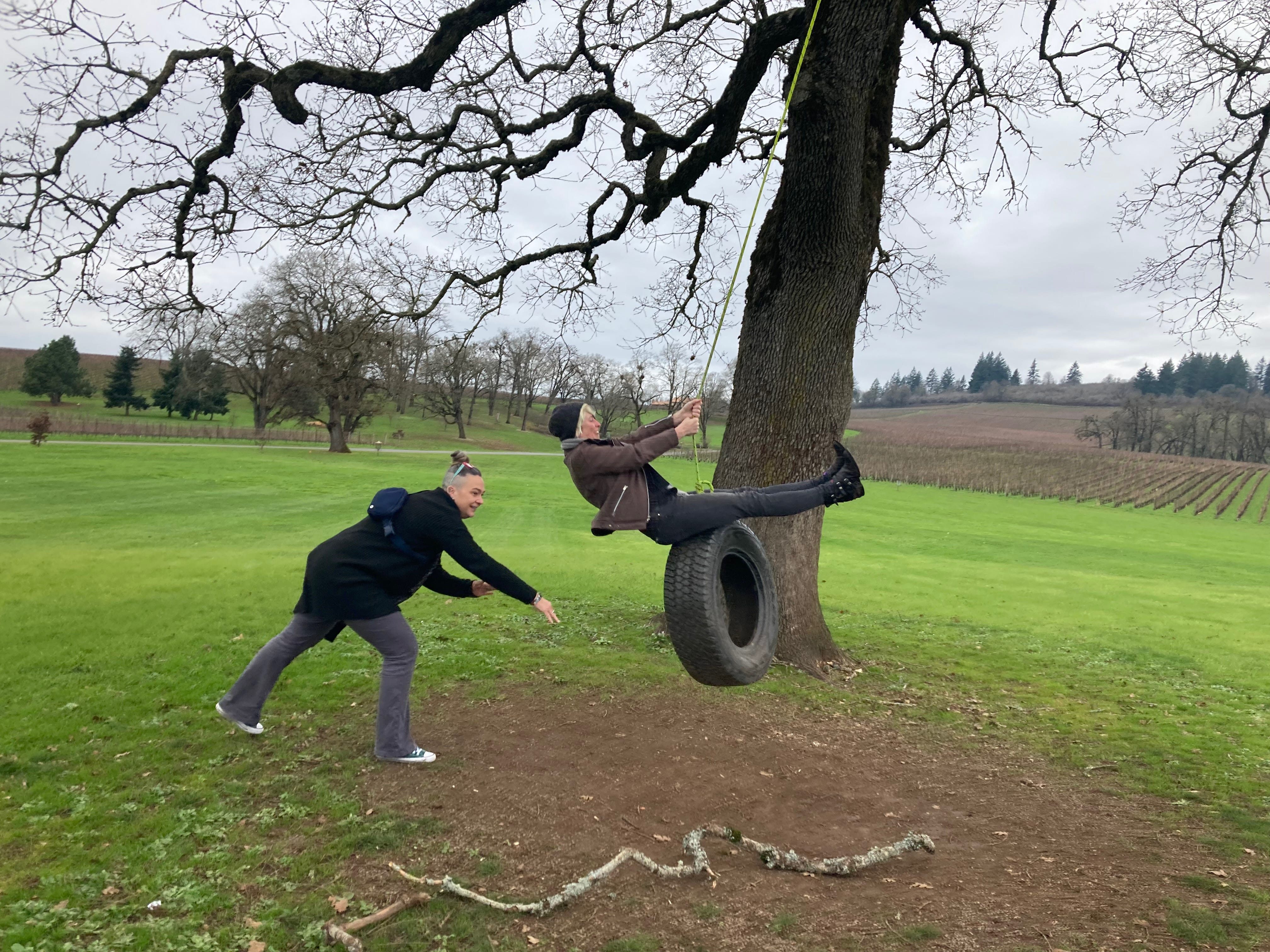
I hurt my leg the night before our wedding playing capture the flag—a bright idea, I know. I had to walk down the aisle on crutches, but my cousin Cleo (not pictured above, though she was also complicit in the day’s wine tasting) helped decorate them in blue and white ribbons to match my dress.
That’s gone so much into the family lore that when my oldest niece tried on my wedding dress recently, she showed it off with the proper accessories: a pair of crutches.
When I broke my hand a few years ago, the doctor must have noticed my delight at getting to choose the color of my cast, because she leaned in conspiratorially and said: “Do you want me to add glitter?”
“Absolutely,” I exclaimed.
As she patted the glitter into the drying cast material, she reminded me that it was going to get everywhere.
“I am very aware,” I told her. This was not my first glitter rodeo.
When I got back in the car with my new cast and showed it to my husband, his eyes went wide in horror.
“What have you done?” he asked. “What. Have. You. Done?”
What had I done?
I’d made myself smile after a really shitty few days, that’s what I’d done.
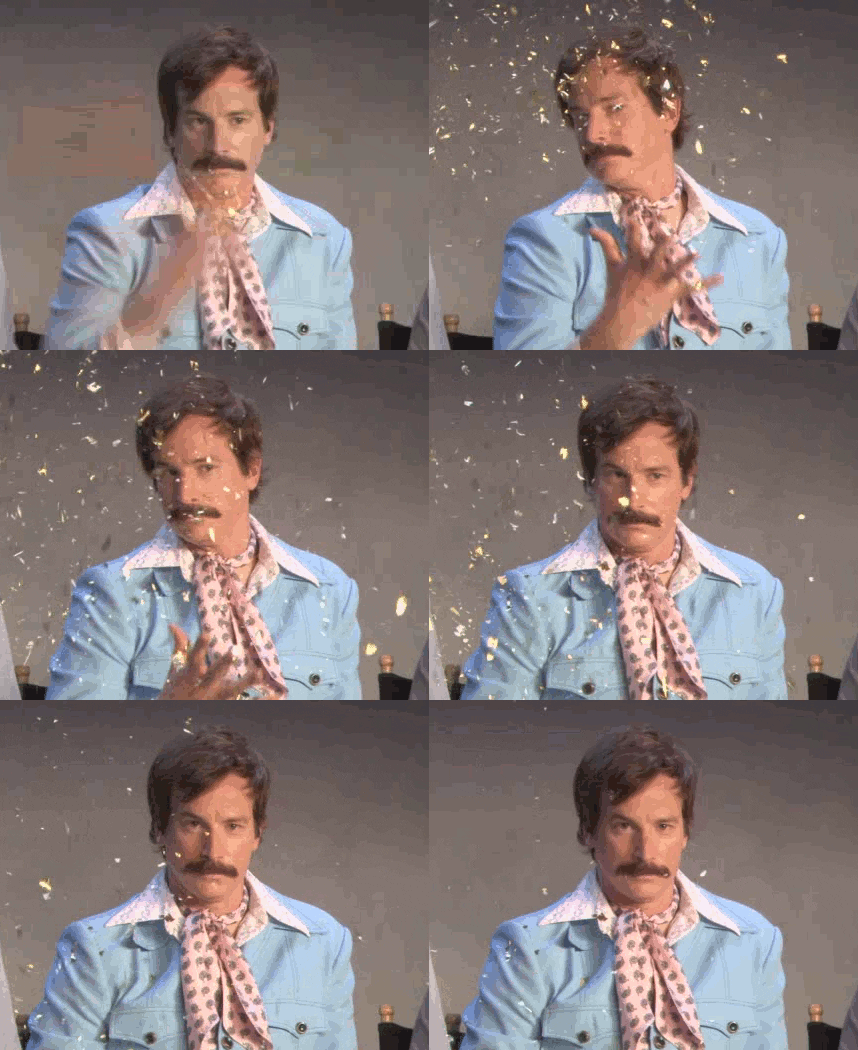
My husband claims we are still finding glitter in our bedroom because of that cast.
And I have no regrets.
I think part of my desire to rhinestone-and-glitter my way through an injury is that it gives me back a little bit of control. Without my eye patch, you might not notice right away that my eye is fucked up, but you will eventually notice. The eyelid is droopy and the iris is broken, which means it’s just a permanently dilated pupil.
(Which, incidentally, is what made David Bowie’s eyes look two different colors. He injured his eye during a fight in his youth, and the darker eye was actually just super dilated.)
“It’s not bad,” people tell me when they see me without my eye patch. “You just look tired.”
Well, can you blame a girl for not wanting to look constantly tired?
With an eye patch—especially with a sparkly rhinestone encrusted snowflake eye patch—I get to present my injury the way I want to. Because believe me, it’s much more fun to get the reaction of, “Oh wow, that’s such a cool eye patch,” than, “Are you OK? You look tired.”
The next stage of my eye journey started this week, when I got fitted for a prosthetic shell. This will add bulk to my injured eye, which should make my eyelid not look so droopy and tired. They’ll be able to paint it to look like my normal eye, so in theory, I can go back to looking how I did.
I should be able to pass for a fully sighted person.
However, as I started looking into prosthetics, I discovered something fabulous. They can paint them to look like your normal eye, but they can also paint them to look like whatever you want.
And if I can have an opportunity to get an eye that sparkles or glows in the dark or looks like a planet? Why would I absolutely not do that.
When people ask me why I have so many different eye patches, I joke that I never miss an excuse to pick up a new crafting hobby—and that’s partly true.
But it’s also this: when life gives you lemons, rhinestone the shit out of those lemons.
It won’t fix things, but it sure does make things more sparkly.
And that’s not nothing.
As a high school teacher, I always give the option to complete assignments in sparkly pens - way more fun. 🤩
Glitter lingers. It lingers! Great piece.